Sales & Marketing Lessons Learned from a Garage Sale
Instead of lamenting a disappointing garage sale experience, I wondered what I could learn from it.
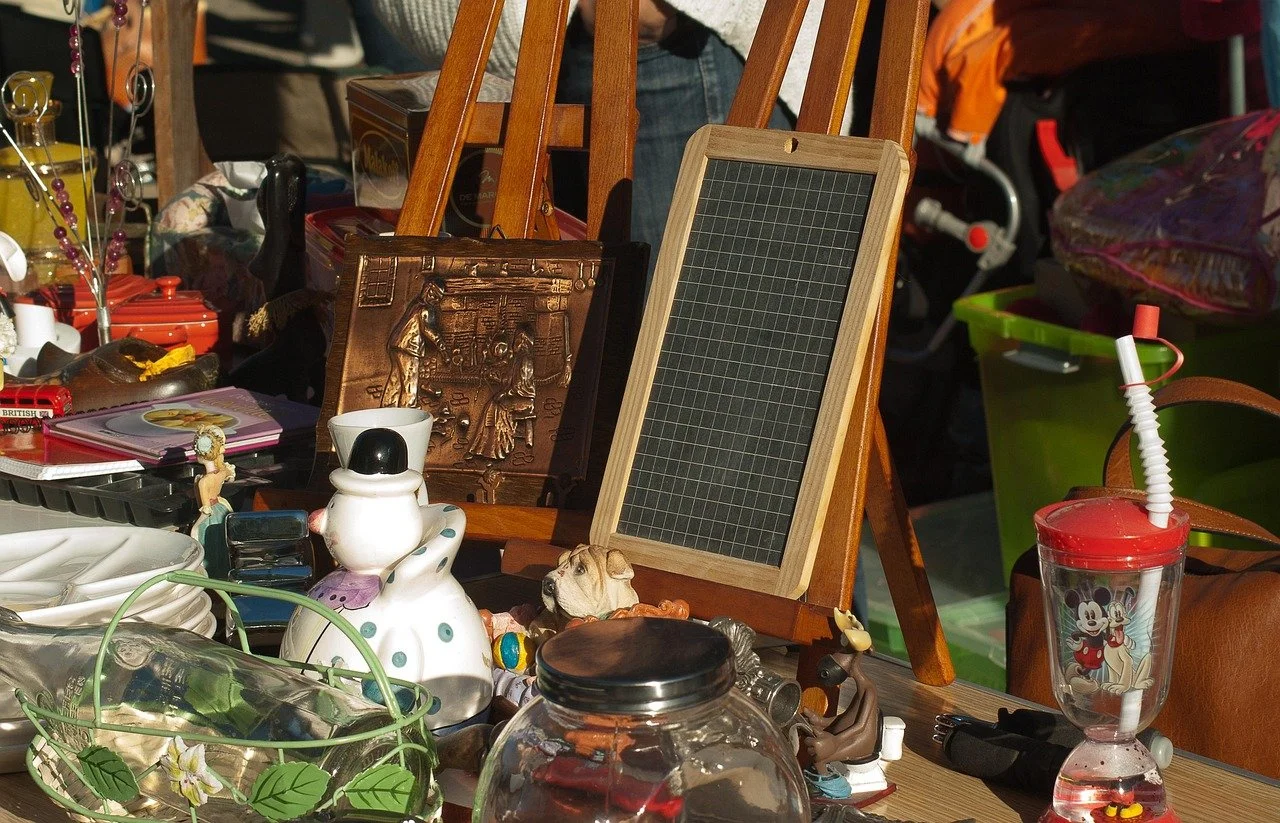
This is image was provided by Jacqueline Macou on Pixabay, but ownership is also claimed by Grease Monkey Direct (please see details at the end of this article).
You may not have noticed, but this May, the Democratic National Convention (DNC) released the 2024 Election Autopsy. This was a report the party was all too happy to see quickly fade behind other more sensational news. The use of the word “autopsy” is cringeworthy already, and the conclusions were no more flattering.
Now I’m of the opinion that autopsies are very useful and need to be read carefully so as to not repeat the same mistakes later. So, I decided to apply the same idea to my last failure: a garage sale that was not a success. Rather than mope about it, I decided to do my own autopsy.
As I started to gather my notes for this article, I thought that these notes could be of interest to small businesses too. Many of the lessons I found could apply to small businesses, especially vendors who do weekend pop-up booths.
So, let’s take a look at what I learned.
The Garage Sale
I have done a few of these in the past. More importantly, I’ve attended too many to count, including estate sales, yard sales, and community sales by charities. My parents were collectors of art and antiques, so I grew up going to open-air sales. I love these events.
Now, our neighborhood HOA doesn’t permit garage sales. As is typical in planned communities, they prefer to have a larger event in a central location where they can control crowds and keep things organized. We are allotted two such events a year: in May and November, for which we have to rent the space and there’s a long wait list. This is hardly convenient when you have stuff to get rid of.
The reason we have garage sales is to get rid of “stuff,” but if we can earn a little bit of money doing it, that’s even better. While we also drop off stuff at local charities on a regular basis, these are becoming more selective about what they accept. So, if it doesn’t sell at a garage sale, we may be stuck with it.
This reality can serve as a first lesson about being a consumer: not much of the stuff we buy has significant value after the initial purchase. A perfect example of this is a couch. It typically costs $1K-5K to purchase, but good luck trying to sell or even give it away – you may actually have to pay someone to collect it! The real value of what is sold has a lot to do with where it is bought, which was also a factor in our garage sale.
Since we can’t have one in our neighborhood, we had ours at my mother’s house. She lives in an older neighborhood in a very nice home, but it’s also outside of an HOA. Consequently, it is also further from typically higher-income buyers that live in HOA neighborhoods… and only buy from open-air vendors in May and November, apparently.
Now obviously, I knew this going into this garage sale. So, I prepared and did everything I could to ensure a great event. I also planned on talking to as many people who wandered into my mother’s garage to assess their expectations. Finally, I took time to plan this garage sale. Perhaps because of all the prep, I was confident going into this…
Well, that might have been overconfidence…
What I Learned
We advertised the garage sale on Craig’s List, the local paper, and on Nextdoor. Interestingly, when I asked people, they all said that they wandered over because of the street signs, not because of anything online. Granted, I didn’t have a chance to ask everyone, but this was revealing.
People were looking for things we didn’t have much of: jewelry, small ceramics, small electronics, exercise equipment, watches, trinkets, collectible toys, video games, tools, small appliances, kitchenware, movies/CDs, and season-specific clothes.
Ironically, we had a large selection of sweaters and winter jackets for sale. While conventional wisdom suggests the off-season is a great time to find these items, our sweaters and jackets were a poor fit for the very warm weather that day.
I tried to be as inviting as I could and I engaged with people as they walked up. No matter how nice I was, most people didn’t want any suggestions or even to talk. They preferred to browse on their own. Obviously, this hindered my “research” a bit.
The people who showed up early were typically looking for specific and typically valuable items. They were on a mission, it seemed, and when they didn’t see what they wanted, they promptly left. In contrast, those who wandered in later were friendlier, dallied longer, and ended up buying unexpected things. One of the last items to sell were my late Dad’s huge vintage Magnavox speakers that had been sitting beautifully at the top of the driveway all morning – I didn’t think those would go.
While I typically like to use large items as anchors to bring people in, they are harder to sell. They do sell, but with significant markdowns. We sold a $400 Ikea sofa bed, but only after we lowered the price to just $25, prominently displayed on huge sign. Actually, after we did, two buyers got into a bidding war, so that was good for us.
Some items you don’t value can surprise you, even bigger items like furniture. We had an old leather swivel chair that we were going to sell for $50. When I looked it up online, it turned out that it was actually vintage and was selling on eBay for between $500-1200! Good thing I checked because a garage sale is not the right place to sell that kind of item. So it’s important to do the research.
While it took some work, putting individual prices on everything was appreciated and helped move items faster. I think people don’t always want to bother to ask; it’s another impediment to a quick sale. This was especially true for small items and ones we had many of but that didn’t have the same price, like our books...
Our books sold too, but at a lower price than expected. An photobook that sells on Amazon for $12 is going to sell at the same price as a self-help book, typically $1-$2. Interestingly, the books that no one looked at were textbooks, novels, cookbooks, technical books, reference/historical books, self-help, and kid’s books.
However, the books that received more attention and sold were art books, healing/cure books, flowers and birds, books on religion/philosophy, and the pretty, showy & well-maintained books. The condition of the covers seemed to be key.
ProTip: it helps to lay them horizontally on the shelf. This works especially well for large books. This makes it easier for people to read the titles without having to lean. If you do lay them horizontally, make sure to use short piles, though; you don’t want them to topple over.
While we didn’t earn a lot, this could have been because of factors we didn’t consider or got wrong: the time of year, the economy, the advertisement, the signage, location, the weather, or even the layout on our driveway. It also helps to have freebies. We had a bin with free little trinkets & toys that kids could dig through, and most of the people took the free candy we had sitting in a bowl.
While we had a few tables, we needed more; ours were wobbly, too. It turns out that most of the stuff that people looked at and bought was from tables. It shouldn’t be too hard to bring a few more sawhorses & wood planks to make more next time... come to think of it, a great place to find sawhorses is probably another garage sale!
ProTip: if it’s going to be a warm day, is to use an easy-up for shade. I burned my forehead and neck, so that would have helped. This has two other advantages: (1) you can hang stuff on them (clothes on hangers, big signs), (2) it makes your house easier to find, especially if the street has large trees and cars.
People typically didn’t haggle. They did when they bought more, but for the most part, they just paid the asking price. We even priced items for haggling (at $6 instead of $5), but we typically just gave a discount when they paid. That also reduces the need for change when someone hands you $20 or $100 bill. Oh, yes, make sure you have plenty of $1s and $5s on hand when you open that garage door.
As I mentioned, we donate quite a bit. After every garage sale, we typically load up the SUV with what’s left for a trip to Goodwill. However, the days of taking a tax deduction for these donations are over. Most people, including us, will take the standard deduction, so donated items like these won’t meet the threshold for a tax deduction. Now we don’t even bother with receipts or claims; we just do it because it helps others. Anyhow, I know this is a factor for some, so I thought I would mention it.
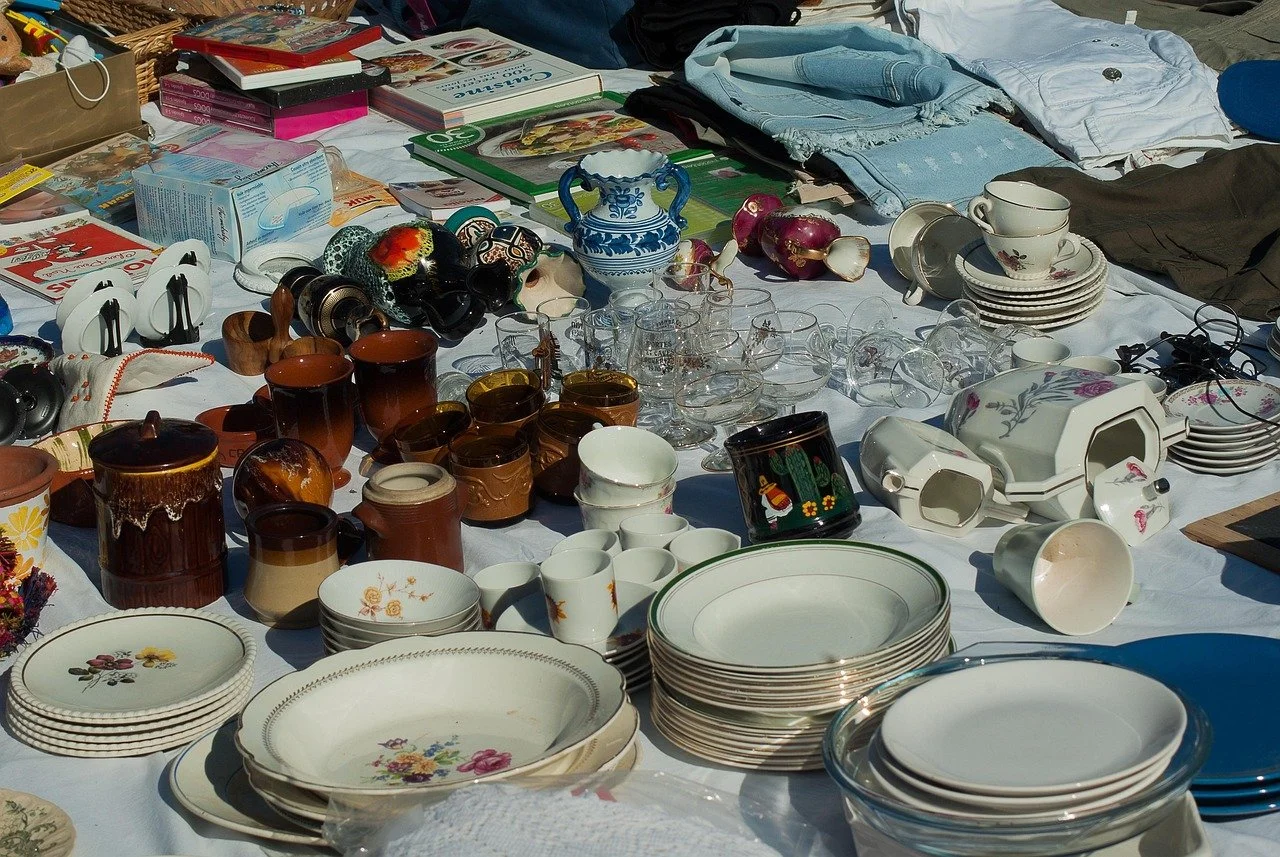
Image by Jacqueline Macou on Pixabay
After the Garage Sale
The mood in the family was a bit down after our garage sale because we didn’t sell much this time. However, I had a bigger purpose for doing this. When we closed the garage door, my back was sore, my neck was burned, and my pockets felt light. We hadn’t even started to load the SUV, but everyone was ready for a nap. Well, I wasn’t, I had way too much to think about and I didn’t even notice I was tired until it was all cleaned up.
Of course, not having to lug the sofa-bed into the SUV or haul bookcases back inside was a treat. Overall, we did OK and I was fine with it. Another plus is that met new neighbors, we had a great time chatting in the garage while sipping coffee, and we learned a lot.
As usual, we had a lot of stuff left over. However, I now also had a better idea of what people are looking for. Instead of loading everything into the SUV, I decided to keep the smaller stuff in boxes in the garage for the next time. If I collected stuff over the next couple of months, we would likely have a much more successful garage sale later. I was planning to do what big stores do: stock more of what customers want.
Here’s the thing, we all have stuff in our homes that is just collecting dust. Who doesn’t have books they no longer need? Who doesn’t have clothes that have gone out of style? Who doesn’t have a whole drawer full of small electronics they’ll never use again? Who doesn’t have a bin of old movies, video games, and CDs they no longer enjoy? The fact is we all have too much stuff that we need to get rid of.
So, in our family, I placed a large bin in the garage labeled GARAGE SALE – you can’t miss it. When we come across stuff we don’t need anymore, we put it in there. I also put one just like it at my mother’s home. If I was still working a 9-5 job, I’d even out one at work because we used to toss so much stuff there. So, when the bins fill up, it will be time for another garage sale.
Final Thoughts
I learned some interesting things from our garage sale:
I’ll definitely spend more time on making better and larger signs.
I’ll also try to get more tables set up.
I’ll also do more to provide more shade over the driveway because my neck is still sore.
Finally, I’ll have different things to sell – some things definitely sell better than others.
I do hope my experience helped shed some light on sales in general, especially for those of you who put up a booth every weekend. I think there are similarities there. Perhaps this last garage sale was not as profitable simply because the economy sucks. Perhaps people are struggling to find disposable cash to buy more stuff.
If so, then that echoes with what I discovered this past weekend. People don’t have much to spend so they’re more discriminating. They probably aren’t going out shopping as often, even at garage sales. If they do, they are looking for small & affordable stuff, or they are looking for stuff they hope to resell. The key is providing more of that stuff… and providing some the free candy too, that was definitely a hit!
I wanted to note something important because bloggers (including small business owners who blog) are often sent copyright notices about images they use on their websites. Some are legitimate, and others are just plain extortion. Ownership of the image at the top of this article is being disputed between a law firm that contacted me today on 9/15/26, and Jaqueline Macou / Pixabay who offered it freely online.
This dispute is between them. So with this notice, I am officially removing myself from the copyright dispute between Jaqueline Macou / Pixabay and Grease Monkey Direct / their legal representation. I have notified both parties of each other’s claims, and I have offered to remove the offending image. I am awaiting a response and will comply with whatever the outcome is. However, I cannot be held responsible for the ownership of an image that is legally made available, without copyright restrictions, on a public website. This is especially pertinent since it is still freely available today on Pixabay, under the same Content Use License, that allowed me to use it in the first place.
Whatever the outcome of this case, this is not my fight. If you ever find yourself in the same situation with an image you have properly cited, you might consider doing the same. It goes without saying, though, that if this happens to you, you should do what you believe is best, perhaps with the assistance of proper legal representation, hence YMMV.